

In the Community
Stories, news, and local highlights from across Chilliwack.

Family Activities in Chilliwack: 20 Ways to Spend the Weekend

Whether you’re raising kids here, visiting for the weekend, or simply looking for new ways to explore your city, Chilliwack offers a wide range of family-friendly experiences that bring the community together. From outdoor adventures and parks to cultural spots and local attractions, there’s no shortage of ways to create meaningful memories right here in Chilliwack BC.
The best part? Many of these activities support local businesses in Chilliwack and strengthen the sense of community that makes this city special.
Here are 20 family activities in Chilliwack that will help you plan a fun, memorable weekend.
Outdoor Family Activities in Chilliwack
Chilliwack is known for its natural beauty and outdoor lifestyle. Families who enjoy fresh air, mountains, and rivers will find plenty of weekend options.
1. Walk or Bike the Vedder River Rotary Trail
The Vedder River Rotary Trail is one of the most popular outdoor spots in Chilliwack.
Families can walk, bike, or picnic along the scenic river while enjoying wide gravel paths and beautiful mountain views. It’s perfect for strollers, kids’ bikes, and relaxed weekend outings.
2. Spend the Day at Cultus Lake
Cultus Lake is a classic family destination in Chilliwack.
Swimming, beach picnics, paddleboarding, and relaxing by the water make this an easy full-day adventure. Families often turn this into a weekend tradition during warmer months.
3. Visit Cultus Lake Adventure Park
For families with younger kids, Cultus Lake Adventure Park offers rides, mini golf, and colorful attractions designed for all ages.
It’s a fun and energetic way to spend an afternoon together.
4. Cool Off at Cultus Lake Waterpark
Looking for high-energy fun?
Cultus Lake Waterpark is one of the biggest water attractions in the area, offering slides, kiddie areas, and family-friendly water features.
5. Hike Bridal Veil Falls
Bridal Veil Falls is one of the most scenic and accessible outdoor destinations in Chilliwack.
The short hike makes it ideal for families with children, and the waterfall creates a memorable experience without requiring a full-day trek.
6. Explore Island 22 Regional Park
Island 22 is a peaceful location for walking trails, birdwatching, and river views.
Families can enjoy picnics, open green spaces, and quiet nature moments away from busy areas.
7. Visit the Great Blue Heron Nature Reserve
This nature reserve is perfect for teaching kids about wildlife and conservation.
Boardwalk trails, educational displays, and birdwatching make it both fun and educational.
Parks and Community Spaces for Families
Chilliwack is filled with parks and recreational spaces that encourage families to spend time together outdoors.
8. Relax at Sardis Park
Sardis Park is a favorite among local families.
The duck pond, walking trails, and playgrounds make it a peaceful and safe environment for kids to play and explore.
9. Spend Time at Townsend Park
Townsend Park offers open green spaces, sports fields, and playground areas for active families.
It’s a great place for weekend soccer games, picnics, or simply letting kids run free.
10. Visit Vedder Park
Vedder Park combines playgrounds, trails, and picnic areas in one location.
Families often spend hours here enjoying the river and open space.
11. Explore Webster Park
Webster Park includes climbing structures, skate areas, and space for kids to burn energy.
It’s a great choice for families with active children.
Indoor Family Activities in Chilliwack
Rainy weekends happen — and Chilliwack has plenty of indoor options for families.
12. Swim at Chilliwack Landing Leisure Centre
The Chilliwack Landing Leisure Centre is a top indoor destination for families.
Waterslides, pools, and hot tubs make it perfect for kids who need to burn off energy indoors.
13. Visit Cheam Leisure Centre
Cheam Leisure Centre provides swimming, recreational programs, and indoor activities for families of all ages.
It’s a reliable go-to for weekend fun.
14. Watch a Movie at Galaxy Cinemas Chilliwack
A family movie night is always a solid choice.
Galaxy Cinemas Chilliwack offers the latest films and a comfortable environment for a relaxing evening.
15. Try Exit Chilliwack Escape Room
For older kids and teens, escape rooms create a fun challenge.
Solving puzzles together builds teamwork and makes for an exciting family experience.
Educational and Cultural Activities in Chilliwack
Weekends can also be about learning and exploring local culture.
16. Visit the Chilliwack Museum
The Chilliwack Museum helps families understand the city’s history and heritage through engaging exhibits and local stories.
It’s a great educational outing.
17. Attend a Show at the Chilliwack Cultural Centre
Live theatre, music performances, and community events make the Cultural Centre a vibrant place for families.
It introduces kids to arts and creativity in a welcoming environment.
18. Visit the Fraser Valley Regional Library
Local library branches in Chilliwack host storytime, crafts, and family programs throughout the year.
It’s a free and valuable community resource.
Seasonal and Weekend Event Activities
Chilliwack truly shines during seasonal events and local attractions.
19. Explore the Chilliwack Corn Maze (Seasonal)
During late summer and fall, the Chilliwack Corn Maze becomes a must-visit destination.
Families can explore themed mazes, farm attractions, and outdoor activities together.
20. Visit Greendale Acres or Local Farm Experiences
Farm experiences in Chilliwack bring families closer to agriculture and local traditions.
Seasonal events, petting areas, and outdoor activities make them ideal for weekend visits.
Why Supporting Local Family Activities Matters
When families spend their weekends exploring Chilliwack, something powerful happens.
Local businesses grow.
Community spaces stay vibrant.
Events continue to thrive.
And families create deeper connections with the place they call home.
Chilliwack isn’t just a location, it’s a community built on shared experiences, local support, and meaningful moments.
With so many local businesses in Chilliwack offering family-friendly activities, it becomes easy to plan weekends that are both fun and community-driven.
Discover More with Chilliwack Connect
If you’re looking for more family activities, local businesses, or weekend ideas, Chilliwack Connect makes it easy to explore what’s happening in the city.
You can discover:
- Local businesses in Chilliwack
- Community events
- Family-friendly attractions
- Services and experiences across Chilliwack BC
Take a few minutes to explore Chilliwack Connect, discover new places, and support the businesses that make this community special.
Because the best weekends in Chilliwack start with local.

Top Hiking Trails Around Chilliwack for Every Skill Level
If you live in Chilliwack BC, you already know: we’re surrounded by some of the most breathtaking landscapes in the province. From peaceful riverside walks to bucket-list summit views, hiking in Chilliwack isn’t just a weekend hobby — it’s part of the lifestyle.
Whether you’re new to the trails, hiking with kids, or chasing alpine views, this guide breaks down the top hiking trails around Chilliwack for every skill level — plus local insights to help you make the most of your adventure.
Let’s hit the trail.
Easy Hiking Trails in Chilliwack (Beginner-Friendly)
If you’re just getting started or want something relaxed and scenic, these Chilliwack trails offer beauty without the burn.
Vedder Rotary Trail
The Vedder Rotary Trail is one of the most popular and accessible trails in Chilliwack. Stretching along the Vedder River, it’s mostly flat and ideal for walking, light hiking, or biking.
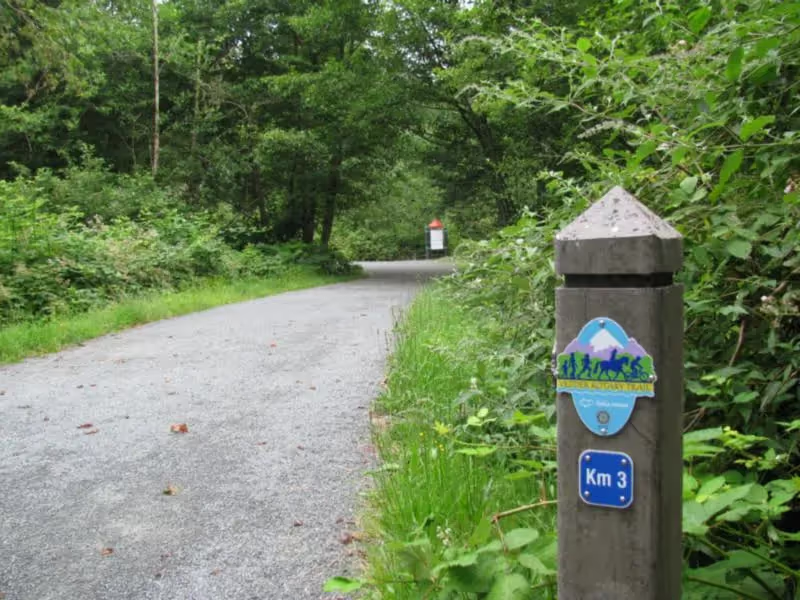
Why locals love it:
- Wide, well-maintained gravel paths
- River and mountain views
- Family and dog friendly
- Multiple entry points throughout Chilliwack
This is a perfect trail if you want fresh air without committing to a full-day hike. It’s also close to many Chilliwack businesses, making it easy to grab a coffee or meal afterward.
Great Blue Heron Nature Reserve
Located right in Chilliwack BC, the Great Blue Heron Nature Reserve offers peaceful walking trails through wetlands and forested areas.

Map of Great Blue Heron Nature Reserve trails and pathways
This is a fantastic choice for:
- Birdwatchers
- Families with young kids
- Anyone wanting a short, educational outdoor experience
The flat boardwalks and interpretive signs make it both scenic and informative — a hidden gem within the Chilliwack community.
Moderate Hiking Trails in Chilliwack (Weekend Warriors)
Ready to elevate your hike? These trails bring moderate climbs and bigger views.
Teapot Hill
Teapot Hill is one of Chilliwack’s most well-known local hikes. Located near Cultus Lake (within Chilliwack boundaries), this trail offers a steady incline and a fun surprise at the top — dozens of hidden teapots placed throughout the forest.
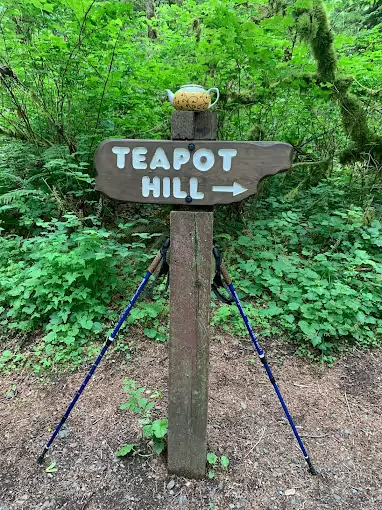
Trail highlights:
- Approximately 4–5 km round trip
- Moderate incline
- Family-friendly for older kids
- Unique and Instagram-worthy
It’s a great “next step” hike if you’ve mastered easier trails and want a bit more challenge without tackling a mountain summit.
Elk Mountain
If you’re looking for incredible valley views without a full alpine expedition, Elk Mountain delivers.

This hike features:
- A consistent uphill climb
- Sweeping views of the Fraser Valley
- Seasonal wildflowers
- Snowshoe potential in winter
It’s a favorite among local businesses in Chilliwack that promote outdoor living and active lifestyles — and for good reason. The payoff at the top is worth every step.
Advanced Hiking Trails in Chilliwack (For Experienced Hikers)
If you’re chasing elevation gain, rugged terrain, and unforgettable views, Chilliwack has no shortage of bucket-list hikes.
Mount Cheam
Arguably one of the most iconic hikes in Chilliwack BC, Mount Cheam offers panoramic alpine views that feel straight out of a postcard.

What to expect:
- Significant elevation gain
- Rough access road (4x4 recommended)
- Wildflower meadows in late summer
- 360-degree summit views
This is a must-do for experienced hikers. It’s also one of the most photographed locations in the Chilliwack community — and once you reach the summit, you’ll understand why.
Lindeman Lake
While shorter in distance, the hike to Lindeman Lake packs a punch with steep sections and rocky terrain.

At the top, you’ll find:
- Stunning turquoise water
- Mountain reflections
- A popular backcountry camping spot
It’s challenging but manageable for intermediate-to-advanced hikers and one of the most rewarding shorter hikes in Chilliwack.
Make It a Full Chilliwack Adventure
One of the best parts about hiking in Chilliwack BC? You’re never far from local support.
After your hike, consider:
- Refueling at a local café
- Booking a massage or wellness service
- Stopping by a local outdoor gear shop
- Supporting restaurants and local businesses in Chilliwack
When you support local businesses in Chilliwack, you’re strengthening the same community that maintains and protects these trails.
That’s what makes Chilliwack Connect such a powerful resource — it helps you discover the people and businesses that make this city thrive.
Trail Safety Tips for Hiking in Chilliwack
Before you head out:
- Check trail conditions (especially in winter or wildfire season)
- Tell someone your hiking plan
- Bring water, snacks, and proper footwear
- Respect wildlife and pack out what you pack in
- Know your limits — choose a trail that matches your skill level
Chilliwack’s terrain can change quickly, especially in alpine areas. Preparation matters.
Why Hiking Is Part of the Chilliwack Lifestyle
Living in Chilliwack BC means having mountains in your backyard. It’s one of the reasons families move here, entrepreneurs launch here, and outdoor enthusiasts stay here.
The trails aren’t just recreation — they’re connection.
They connect us to:
- Nature
- Our neighbors
- The growing Chilliwack community
- The local businesses that fuel our adventures
And that connection is something worth preserving.
Explore More with Chilliwack Connect
Chilliwack is more than mountains and trails — it’s a thriving, growing, supportive community.
If you’re planning your next hike, make it a full local experience.
Discover Chilliwack businesses, explore trusted services, and support the people who make this city special.
Visit Chilliwack Connect to explore local businesses in Chilliwack BC and stay connected to the heart of our community.
Because when you support local, everyone climbs higher.

What Is Fractional HR & Why More Chilliwack Businesses Are Choosing It

As a business grows, there’s often a moment when “people stuff” starts taking up more space.
It might show up as managers unsure how to handle performance concerns, inconsistent roles or compensation, increasing legislative complexity, or a difficult employee transition that suddenly feels high-risk. Often, it’s the realization that HR decisions are being made reactively instead of intentionally.
Many small and mid-sized businesses today are facing big-organization people complexity without big-organization capacity or resources. At the same time, hiring a full-time HR professional doesn’t always make sense — financially, operationally, or culturally.
This is where fractional HR comes in.
Over the past several years, I’ve worked with organizations across Chilliwack and beyond using this model, and it has become one of the most effective ways for businesses to access experienced HR support without overbuilding.
What Is Fractional HR?
Fractional HR is a model where businesses engage senior-level HR expertise on a part-time, flexible, or as-needed basis.
It’s part of a broader shift toward more agile workforce models, allowing organizations to access the right expertise at the right time, without committing to permanent structures before they’re needed.
Rather than hiring a full-time HR role, organizations bring me in to:
- guide leaders through complex people decisions
- manage sensitive employee matters
- build HR foundations, frameworks, and policies
- support compliance and defensible decision-making
- or provide ongoing advisory support as the business evolves
Fractional HR isn’t about outsourcing responsibility. It’s about accessing experience and judgment when it matters most.
From Reactive HR to Proactive People Strategy
One of the biggest shifts I see in organizations today is the move away from reactive HR toward proactive people strategy.
Many leaders don’t need HR support every day — but when they do, the stakes are high. Performance management, terminations, compensation decisions, and organizational change all require thoughtful, well-informed judgment.
Through fractional HR, I help organizations:
- address issues early, before they escalate
- make consistent and defensible people decisions
- align HR practices with business goals
- reduce risk while supporting employees fairly
In practical terms, it helps leaders move from “putting out fires” to managing people with confidence.
Why Fractional HR Works Well for Small and Mid-Sized Businesses
Fractional HR is particularly effective for organizations that are growing, changing, or operating with lean leadership teams.
Key benefits include:
Senior expertise without a full-time hire
Fractional HR is delivered by experienced practitioners who have worked across industries and organizational contexts. That depth matters when navigating complex or sensitive situations.
Manager enablement and leadership confidence
A core part of my work is supporting managers — helping them navigate performance conversations, employee transitions, and people decisions with clarity and confidence.
Flexibility as needs change
Support can scale up during periods of growth, transition, or increased complexity, and scale back when things stabilize.
Cost-effective and right-sized
Organizations gain access to HR leadership without carrying the cost or structure of a full-time role before it’s needed.
Risk-informed decision-making
With evolving employment legislation and rising expectations around fairness and documentation, even small organizations benefit from HR decisions that are thoughtful and defensible.
Matching HR Capability to Organizational Needs
Another dynamic I see often is organizations hiring an HR role based on what they can afford, rather than what the role is expected to deliver.
Early-career or administrative HR professionals can be incredibly effective when their responsibilities are aligned with their experience — particularly in areas such as onboarding, payroll coordination, benefits administration, and policy maintenance. These transactional HR functions are essential to day-to-day operations.
Challenges arise when organizations assume that having “an HR person” means all HR needs are covered.
More complex matters — such as employee terminations, investigations, performance management, compensation strategy, or regulatory complaints — require a different level of experience and judgment. In some cases, less-experienced HR professionals may not yet know what they don’t know, which can unintentionally increase risk for both the organization and the individual in the role.
Fractional HR can help bridge this gap by complementing internal HR capacity with senior-level support, ensuring that the right expertise is applied to the right issues, while allowing internal HR professionals to grow and succeed in their roles.
HR isn’t a checkbox — it’s a discipline, and outcomes depend on matching the right skills to the right work.
What Fractional HR Looks Like in Practice
To protect confidentiality, the following examples are anonymized, but they reflect the real work I do with organizations across British Columbia.
Ongoing HR Support for a Growing Professional Services Firm
For several years, I’ve worked with a professional services organization of approximately 40 employees that does not have in-house HR.
My role is to provide ongoing, month-to-month HR support on an as-needed basis, including guidance on complex performance management situations, employee transitions and layoffs, retention initiatives, and people strategy support for leadership.
Because I know the organization, its culture, and its leadership team well, I’m able to provide timely, practical support when issues arise. Over time, this partnership has created consistency, reduced risk, and strengthened leadership confidence.
Strategic HR Projects for a Mission-Driven Organization
In another case, I support an organization that engages me for large, strategic HR initiatives, rather than ongoing monthly support.
This work has included a comprehensive compensation review, development of a compensation strategy and protocols, support through complex employee transitions, and the design of a performance optimization process.
They do not have in-house HR, but they do face increasing people and governance complexity. Fractional HR allows them to bring in senior expertise at critical moments, ensuring decisions are intentional, aligned, and sustainable.
Supporting In-House HR with Complex Matters
Fractional HR is not only for organizations without HR teams.
I also work with organizations that have in-house HR, where my role is to support more complex or higher-risk matters such as sensitive employee transitions, advanced performance management situations, policy and handbook development aligned with legislation, and workplace complaints or regulatory processes.
In these cases, fractional HR acts as an extension of the internal team, providing additional capacity or specialized expertise when needed.
Employee Experience Happens in the Moments That Matter
Employee experience isn’t created by perks or policies alone.
It’s shaped by how organizations handle moments such as feedback conversations, organizational change, role clarity, and difficult but necessary decisions.
Some of the most meaningful feedback I’ve received came after supporting a large employee engagement initiative in the public sector. Following a staff session, a leader shared that the experience was a career highlight — a moment of genuine connection and alignment with their team.
Those outcomes come from thoughtful people leadership, supported by the right expertise at the right time.
Is Fractional HR Right for Your Business?
Fractional HR is often a good fit if:
- your organization is growing or evolving
- people issues are becoming more complex
- you need HR expertise but not full-time
- you want proactive support rather than crisis management
- you value practical advice grounded in experience
It’s a modern approach to people support that reflects how many organizations are rethinking structure, capacity, and expertise.
Supporting Local Businesses Through Flexible Expertise
One of the things I value most about working in and around Chilliwack is the strong sense of community among local businesses.
Platforms like Chilliwack Connect make it easier for organizations to find trusted local expertise — whether that’s HR, accounting, legal, or other professional support — in a way that fits their size and stage.
Fractional HR is simply one more way businesses can access meaningful support without overextending.
Final Thoughts
Fractional HR isn’t about having less HR.
It’s about having the right level of HR, delivered in a way that supports leaders, employees, and the long-term health of the organization.
For many businesses, it’s the difference between reacting to people challenges and managing them with confidence.
Need HR support?
Use Chilliwack’s Growing Directory to Find Trusted Businesses Near You
If you’ve ever searched endlessly for a reliable local business — whether a plumber, bakery, photographer, or roofer — you know how overwhelming it can be to compare websites, reviews, and social content just to make one simple decision.
That’s exactly why Chilliwack Connect, our city’s growing business directory, was created: to give locals a single, trusted place to discover, compare, and connect with the best businesses in Chilliwack.
Today, more residents than ever are turning to Chilliwack Connect’s business directory to find service providers they can trust.
Whether you’re new to the area, supporting local, or just want a faster way to choose, Chilliwack Connect helps you cut through the noise and get straight to the good stuff.
Why Chilliwack Connect Matters More Than Ever
Chilliwack is expanding — quickly. With new neighbourhoods, new shops, and new businesses launching every month, it’s becoming harder to keep track of what’s out there, let alone which ones come recommended.
That’s where Chilliwack Connect steps in as the modern solution.
More than just a listing platform, Chilliwack Connect:
• Highlights trusted, verified local businesses
• Helps residents compare services in one place
• Supports small business owners with better visibility
• Strengthens our local economy by keeping dollars in Chilliwack
Instead of relying on outdated Google listings or guesswork, locals can now browse a centralized, modern directory built for ease, transparency, and community connection.
Find Trusted Chilliwack Businesses in Seconds
The beauty of Chilliwack Connect is the simplicity.
Search by category.
Browse featured listings.
Click into full business profiles that feel like mini-websites.
Each listing includes essential details: services, photos, contact info, website links, Google reviews (where available), and more — making it effortless to choose confidently.
From home services to health, food & drink, creative professionals, trades, wellness, and everything in between, Chilliwack Connect helps you skip the guesswork and find exactly what you need.
A Growing Directory That Keeps Getting Better
Chilliwack Connect is one of the fastest-growing platforms in our region, with new businesses joining every week.
As more companies create their listing pages, residents get an even richer database of trusted service providers.
Because Chilliwack Connect is built for real people, the experience is clean, modern, and easy to navigate — no clutter, no ads, no spam. Every listing feels professional and reliable, giving locals even more confidence when choosing a business.
This rapid growth means:
• More categories
• More local businesses to choose from
• Better discoverability for small business owners
• A stronger, more connected Chilliwack
Simply put: Chilliwack Connect is becoming the go-to hub for finding trusted services across the entire city.
How Local Businesses Benefit From Being Listed on Chilliwack Connect
Chilliwack Connect doesn’t just help residents — it empowers local businesses too.
By joining the directory, businesses get:
• Increased local visibility
• A dedicated landing page that acts like a mini website
• Better search discoverability
• A professional presence without the high cost of a full website
• A place to showcase reviews, photos, and services
• A chance to stand out early as the directory grows
For many small business owners, this visibility leads to more inquiries, more customers, and stronger brand trust within the community.
Why Locals Are Choosing Chilliwack Connect Over Google Alone
Google search is crowded. Listings can be outdated, incomplete, or hard to compare. Some great Chilliwack businesses don’t even show up on page one — or at all.
Chilliwack Connect solves this by focusing exclusively on Chilliwack-based businesses and presenting their information in a clean, consistent, high-trust format.
Locals love it because:
• It only features local businesses
• They can compare businesses side-by-side
• Listings are clear and reliable
• It saves time and removes frustration
• It feels like a community-supported resource
When they want a trusted service provider, Chilliwack Connect is becoming their first stop.
Start Exploring Chilliwack Connect Today
Whether you’re looking for a new coffee shop, a contractor, a dog groomer, a chiropractor, or a creative specialist, Chilliwack Connect makes it easier than ever to find trusted businesses right here at home.
With new listings added weekly and categories expanding every month, this platform is quickly becoming the most valuable tool for residents and business owners across our city.

Where Cream Meets Community: Inside the Heart of Benanna Bakery
Before the sun rises over Chilliwack, the ovens at Benanna Bakery are already humming. By 4 AM, the back kitchen is warm, the air thick with the smell of sourdough, butter, and something sweet that always seems to be cooling on a rack nearby. By the time most of us are pouring our first cup of coffee, the team here has been shaping dough, whipping cream, slicing strawberries, and laughing their way through another early morning together.
At the center of it all are Travis and Rebecca Neels, the husband-and-wife duo carrying on a family legacy that began with two people: Ben and Anna — Rebecca’s parents. Their names became the foundation of Benanna. The spelling? That was the kids, inspired by memories of working on a chicken farm and joking about “banana farms.” The first time their vanilla slices and turnovers sold out, the community kept coming back… so the name stayed. And to this day, Rebecca laughs that she can no longer spell the regular word “banana” correctly — it’s always B-E-N-A-N-N-A in her grocery list now.
A Dutch Bakery at Heart
Step through the front doors on any given morning and you’ll feel it immediately — that unmistakable European coziness. Or as Rebecca teaches customers, the Dutch word gezellig — a warm, homey feeling you almost have to feel to understand, complete with the proper guttural “G” rolling from the back of the throat.
The commitment to doing things the Dutch way runs deep here.
- They use ingredients that are harder to source in Canada, often importing decorations and essentials from Holland with the help of family overseas.
- They grow their own red currants, because they cannot find them anywhere in Canada.
- They whip cream at 36%, one of the highest fat percentages available here — still lower than the 40–42% they’d be using in Holland.
And their pastries? Every local regular has their favourite, but Rebecca is clear:
“If you’re starting your Benanna journey, you have to try the tompous (vanilla slice). For sure.”
It’s the one that started it all — layers of puff pastry, custard, and icing that trigger childhood memories for Dutch customers who haven’t tasted one in years.
From there, she’ll guide you to the turnovers, sausage rolls, or the stunning strawberry slof — a recipe they discovered in Holland and knew instantly needed to become part of their lineup. “I don’t even like cake,” Rebecca admits, “and the first bite I knew we had to make it.”

The People Who Make the Magic Happen
What makes Benanna feel so special isn’t just the pastries — it’s the people.
Inside the kitchen, every station has a rhythm of its own, shaped by bakers who have become family:
- Tonilynn, the early-morning powerhouse, arrives in the dark to heat the ovens and bake the sourdough, croissants, muffins, and endless trays of sausage rolls.
- Linnea, their lead pastry chef, is the quiet artist in the back. Every new seasonal creation begins as a sketch she draws by hand before turning it into reality. Her salted caramel mousse with brownie base and mirror glaze is one of her proudest works.
- Rihanna, one of the friendly faces up front, says the bakery is “one of the best places I’ve worked for fairness and equality.”
Their camaraderie is real, unfiltered, and often hilarious — butter being thrown across the kitchen, staff teasing each other, and lots of laughter. This isn’t just a workplace — it’s a little community of its own.
Travis: The Designer Who Became a Baker
Travis wasn’t supposed to be here.
When he and Rebecca started dating, he swore he’d never:
- wear an apron
- touch dough
- talk to customers
But now?
You’ll never find him without an apron, he handles dough daily, and he jokes around with customers like it’s second nature. With his graphic design background, the artistry shows in his piping, colour pairings, and seasonal pastry designs.

A New Space, a Big Leap, and a Busy Season
Benanna began in a tiny building across from McDonald's — small enough to fit inside their current storefront. When that building sold, they baked out of a storage container for a few chaotic months until their new location opened.
Today, the bakery stretches across what used to be three separate commercial units. They hadn’t planned to rent all three, but the landlord suggested they’d need the space within a year — and six months later, they already did.
Every square inch matters — especially during Oliebollen season, the Dutch deep-fried holiday treat they make every Saturday from November to Christmas, for Christmas Eve, and New Year’s. In July, they even fry them outside in 30°C weather for their annual Christmas in July neighbourhood event.

A No-Waste Bakery Making a Real Difference
Perhaps the most inspiring part of the Benanna story is their commitment to zero waste.
When they took over, leftovers were common. Today, they are proudly no waste.
Leftovers are used in one of three ways
1. Too Good To Go — a program they brought to Chilliwack after discovering it in Holland. Locals can pick up a $24 bundle of pastries for $8.
2. Donations — to the Salvation Army, Better Beginnings, Bernard Elementary, and Triverse. Bernard’s students famously devour “number two” cookies — often 300–600 at a time.
3. Repurposing — day-old bread is dried and turned into breadcrumbs when needed.
One story stands out
A parent once told Rebecca that the Too Good To Go box they purchased would be their child’s birthday cake because they couldn’t afford one. “That’s just… special,” she says.
They put so much work into everything. Knowing it can still make someone’s day means a lot.

A Bakery That Feels Like Family
As the day gets busier, the team moves together instinctively. Someone shouts for more butter. Someone cracks a joke. Doors open. Pastries sell out. A regular walks in and is greeted by name.
Even with the chaos — the good kind — this bakery is gezellig in the purest sense. Warm. Lively. Familiar.
Rebecca and Travis grew up in Chilliwack. They know the community — and the community knows them.
They’ve built something more than a bakery.
They’ve built a place people return to for comfort, connection, tradition, and a little sweetness in their day.

Visit Benanna Bakery at 8985 Young Rd, Chilliwack, BC V2P 1L7 or order online at www.benannabakery.com
This blog was created in collaboration with:
Desiré Kokuvi Amouzou at Find You in the Valley
All photography was shot by Find You Media

Is Your Business Wasting Money On Unused Technology

When it comes to running a small business, every dollar counts. You can’t afford to pay for things that don’t provide you or your clients with real value. Most expenses need to earn back their cost (and more) or they risk being wasteful.
Sometimes these costs are hidden. Sometimes they accumulate over the years without you noticing. Sometimes you’re building things at such a break-neck speed that you just buy the thing that fixes the issue there and then and then forget about it.
Sometimes you just don’t know you’re paying for something at all.
My neighbour John and the $5,400 internet bill
That’s what happened to my neighbour. Let’s call him John for the sake of the story. John is in his mid-70s and has lived a fruitful, productive life in the construction industry. He’s an old-school character and can turn his hand to anything except technology.
He’s helped me out on numerous DIY projects at my own home over the past couple of years and has even fabricated custom nuts and bolts for me on one occasion.
So imagine my delight when he presented me with an opportunity to help him for a change.
He only recently got a cellphone and has never had a laptop, desktop or even an internet connection (more on that later).
He’d been on a trip to see his sister across the country and, to help him join and participate in his local classic car club, she bought him a tablet. She set him up with an email account to get it up and running and even walked him into the airport to connect it to the Wi-Fi before sending him back to BC. Once he returned home, he was on his own.
That’s where I come in.
“Chris, can you help me get this thing connected? I don’t have the internet or WiFi and I’m not sure what I need to do.”
During our chat, I discovered that he had a mobile data plan. I realised that the cheapest thing to do would be to set him up with an automatic hotspot from his cell phone. I knew this would save him about $100 a month versus a separate internet service provider and for his use case, it seemed like a good solution.
After about 10 minutes I had set up the hotspot and everything was working fine. I explained that he should see how that goes and, if the performance wasn’t great, we might need to look at getting him an actual internet connection.
Then I saw his TV with a box from a well-known internet service provider which prompted me to investigate further. I asked to check his most recent bill for the TV service.
Here’s what I saw:
• Landline telephone services – $20
• TV service – $65
• Fibre internet service – $90
“Wait, WHAT?”
John had been paying for fibre internet for over five years at $90 a month and hasn’t even owned a device capable of using it in that time.
That’s more than $5,400 wasted.
After we stopped shouting at the piece of paper and cursing the “big corporate internet company” for their shrewdness; I poked around behind his TV, found a dusty WiFi router and connected his new tablet.
If it can happen to John, it can happen to someone in your family or someone in our community
John’s story caused me real concern. How many older neighbors do we have in Chilliwack or in our own families that are blindly paying for things they don’t need or use?
It’s worth checking in on the people closest to you and doing a quick review with them just to make sure they aren’t being taken for a ride.
After all, the cash is better in your family’s pocket than in some big corporation’s whose name rhymes with Dodgers (cough cough).
What’s this got to do with your business?
The example above is just the household of an elderly gentleman where things are relatively simple. But let’s apply the same principle to your complex business.
• What software are you paying for that you don’t use?
• That thing you subscribed to, to see if it was a good fit… Are you still paying for that?
• Did you really cancel that old backup Telus connection?
• Are your Microsoft or Google business licences sized appropriately for what you actually use?
It’s time to take stock. Take a detailed look at your outgoings and ask yourself:
“Why are we paying for this, and how does it provide value to our business?”

How to find hidden technology costs in your business
If you want to make sure you are not wasting money like John was, here are some simple and practical checks you can do. You do not need to be technical to run through these. They are straightforward and can highlight a surprising amount of hidden waste.
1. Review your bank statements and credit card charges
Look for small recurring charges that you cannot immediately identify. These are often old trials, forgotten subscriptions or tools you only meant to test temporarily. If you see something you do not recognise, search the name and confirm whether your business still uses it.
2. Check your Microsoft 365 or Google Workspace licences
Inactive or unused accounts are one of the biggest sources of unnecessary spending. Log in to your admin portal and look for users who have not signed in for months. If an account is not being used, you can often remove the licence or downgrade it to a cheaper tier.
3. Match every tool to a clear business purpose
Take a simple inventory of all the software you use. Ask yourself what each tool does and who uses it. If two tools overlap, or if you cannot clearly explain why a subscription exists, it may be an unnecessary cost.
4. Look for old devices that still have active licences
Many businesses pay for antivirus, backup or remote access licences that are still tied to machines that were replaced years ago. If a laptop was retired, make sure its licence was deactivated at the same time.
5. Ask your team what tools they have signed up for
Shadow IT is real. Employees sometimes create their own accounts for PDF tools, note apps, storage apps or task managers. They mean well, but the result is duplicated costs and multiple tools doing the same job. A quick check-in often uncovers subscriptions nobody realised the business was paying for.
6. Confirm whether you still need your backup and security products
Security is important, but setups can become messy over time. You may find multiple backup products, overlapping security tools, or older plans that were never cancelled. Make sure everything you pay for directly contributes to your day-to-day protection.
7. Create a simple spreadsheet of every subscription
One page is enough. List the tool name, purpose, cost per month, renewal date and whether it is still providing value. This is one of the easiest ways to get clarity and spot waste immediately.
Why getting expert help can actually save you money
It might seem counter-intuitive to pay a third party like us to do this for you but, just like hiring a good accountant or lawyer, hiring someone with the technical experience to navigate the complicated world of technology can pay dividends in the long run.
Think about it. If you’re trying to navigate Microsoft’s licensing model with little or no experience, you could be throwing thousands of dollars per year down the drain. That’s just one application!
With a few conversations and a little discovery, we can help you claw back real savings and give you peace of mind that your technology dollars are being used wisely.
We believe the technology in your business should exist solely to contribute to your “Why” and not be wasting your time, money or causing any unnecessary frustration.
At WHY IT Solutions, we’ve been helping businesses across Chilliwack and the Fraser Valley get the most out of their technology and ditch anything that isn’t pulling its weight. We help businesses get their technology to do the job it was meant to do in the first place.
Whether you need day-to-day IT support, proactive protection or help when you’re making big technology buying decisions, Why IT Solutions can help.
If you’re interested in streamlining your software licence costs, exploring outside help with your technology or just need support with IT in general, reach out to us at WHY IT Solutions.

Top 10 Coffee Shops & Cafés to Visit in Chilliwack
There’s something magical about the first sip of coffee in a comforting café — the aroma, the cozy corner, the hum of community around you. In Chilliwack, these small moments are woven into our local culture. Whether you’re meeting a friend, grabbing a quiet moment alone, or exploring a new part of the city, our cafés offer something more than caffeine: they offer connection.
Below are ten local gems that make Chilliwack’s coffee scene warm, vibrant, and worth exploring.
1. Smoking Gun Coffee Roasters
Downtown Chilliwack’s favourite roastery, Smoking Gun greets you with the rich scent of beans roasted on-site. It’s a spot that intentionally blends craftsmanship with community, creating a space where people come for exceptional coffee and stay for the inviting atmosphere.
“Best coffee ever!!!”

2. Land Studio & Café
Nestled by the Vedder River, Land offers more than a menu — it offers a moment. With its movement studio, nourishing food options, and beautiful surroundings, this café invites you to pause and settle in.
“Friendly staff, welcoming atmosphere… the river-front location makes it one of the best cafés to visit in Chilliwack.”

3. Harvest Store & Café
This family-owned café has become a local gathering place where comfort meets quality. With food made from local ingredients and a warm, welcoming vibe, Harvest is a go-to spot for both quick stops and lingering brunches.

4. Corner Nook Café
Small, charming, and full of character — Corner Nook feels like home the moment you walk in. It’s known for hearty breakfasts, great coffee, and staff who treat every guest like a regular.
“Very friendly staff and great food!”

5. The Little Beetle Bistro
Bright, stylish, and delicious — Little Beetle is beloved for its beautifully plated dishes and comforting drinks. It’s a favourite for both everyday coffee runs and weekend brunch dates.
“The new space has such a great vibe—bright, welcoming, and full of charm.”

6. 5Notes Coffee Roastery
A local favourite for specialty beans and handcrafted drinks, 5Notes Coffee Roastery brings a warm, modern atmosphere to the community. With freshly roasted coffee and a focus on quality, every cup feels intentional and full of flavour.
Address: 45890 Hocking Ave #101, Chilliwack, BC V2P 1B4, Canada
“The best coffee and friendliest service — always worth the stop.”

7. Amble Coffee
Located near the Vedder River dog park, Amble Coffee serves up incredible coffee from a cozy truck with an unbeatable view. It’s a calming, slow-living kind of stop.
“Only they know how to brew best coffee.”

8. Hofstede’s Country Barn
Part market, part bakery, part café — Hofstede’s is a beloved Chilliwack staple. With fresh baked goods and excellent coffee, it’s a place where families, friends, and neighbours gather.
“Their coffee is excellent and the food much better than most.”

9. Cultivate Café
Thoughtfully sourced food and specialty coffee create an experience that’s both comforting and inspiring. Cultivate is ideal for meeting up, getting work done, or simply enjoying time to yourself.
10. Loose Caboose Café
Full of charm and nostalgia, Loose Caboose offers classic comfort food, friendly service, and great coffee. It’s a local favourite with a warm, inviting feel.
“My personal favourite is the ‘Always perfect’ Eggs Benedict.”

A New Way to Explore Your Own Backyard
Chilliwack’s café culture is special because every spot brings its own flavour — a roasting style, a scenic patio, a family recipe, a community story. There’s no single “right” place to go. Instead, there’s a world of little discoveries waiting in corners you haven’t explored yet.
Maybe your next great coffee moment will be at a café you’ve never visited — tucked behind trees, down a quiet road, inside a lively market, or beside the river. That’s the fun of it. In Chilliwack, curiosity leads to connection.
So choose a new café this week. Wander into a neighbourhood you don’t usually explore. Sit down, savour the moment, and see what unfolds.